
Introduction
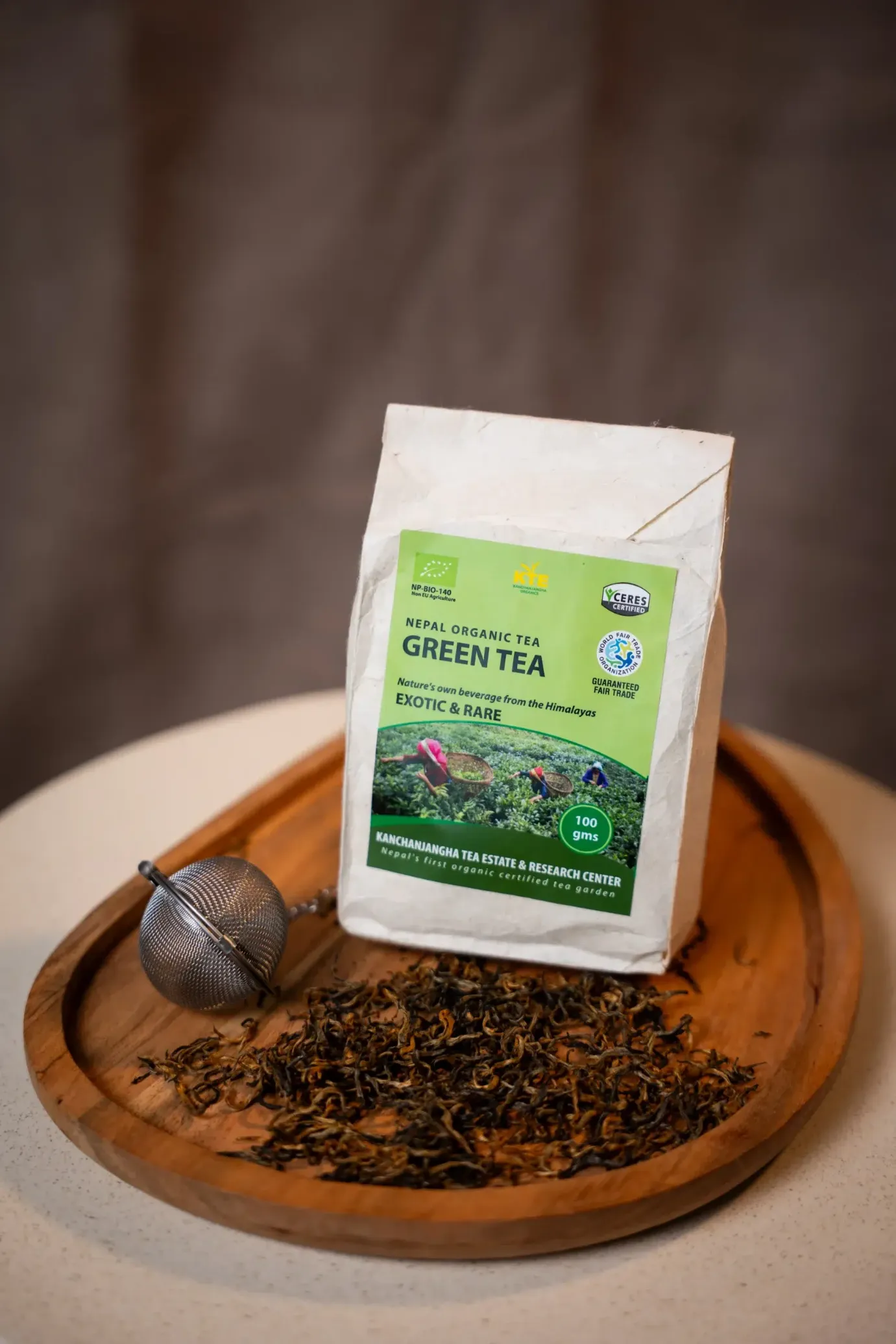
Green tea has long been appreciated for its delicate flavour, refreshing character and place in traditional tea-drinking cultures. Among the many varieties available today, handpicked green tea from the Himalayan region of Nepal offers a distinctive experience. Grown in high-altitude gardens and carefully harvested in small batches, this type of tea reflects the character of its environment and the care involved in its production.
From its origin to its final infusion, several factors contribute to the quality and flavour of Himalayan green tea.
Origin: Grown in the Himalayan Highlands
The growing environment plays an important role in shaping the character of tea. Nepal’s high-altitude Himalayan gardens provide cool conditions and a distinctive mountain environment for tea cultivation.
Tea grown in these regions can develop nuanced aromatic and flavour characteristics. For tea enthusiasts, knowing the origin of a tea provides useful insight into what makes it different from teas grown in other regions.
Handpicked green tea is harvested in small batches, helping producers focus on selecting suitable leaves and buds rather than relying solely on large-scale mechanical harvesting.
The Two-Leaf-to-One-Bud Method
One notable feature of premium handpicked green tea is the two-leaf-to-one-bud harvesting ratio. This approach involves selecting two young leaves together with a developing bud. Careful selection can contribute to a more refined tea experience. It also reflects the attention given to the raw material before the leaves reach the processing stage.
Some important aspects of this green tea harvesting approach include:
1. Selective harvesting:
Young leaves and buds are carefully chosen rather than harvesting indiscriminately.
2. Small-batch production:
Smaller batches can allow greater attention to leaf selection and processing.
3. Tender leaves:
Younger leaves can contribute to the tea’s delicate flavour and aroma.
4. Consistent quality:
Careful harvesting can help create a more uniform product.
How Processing Influences Flavour
After harvesting, green tea leaves are processed differently from black tea. Green tea is minimally oxidized, helping retain much of its natural character. The handpicked Himalayan green tea is gently roasted and minimally oxidized. These steps can help develop its distinctive flavour while maintaining a fresh character.
The resulting tea may offer a clear yellow-green infusion accompanied by floral and subtle grassy notes. Its relatively delicate profile makes it suitable for people who enjoy refreshing teas without an overly heavy flavour.
What Makes the Tea High Quality?
Quality is influenced by several factors rather than a single characteristic. When purchasing Himalayan green tea, consider:
1. Growing altitude:
High-altitude cultivation can influence the tea’s flavour and aroma.
2. Leaf selection:
Carefully selected young leaves and buds can contribute to a refined cup.
3. Processing:
Gentle roasting and minimal oxidation help preserve the tea’s natural character.
4. Freshness:
Proper storage is important for maintaining flavour and aroma.
5. Loose-leaf format:
Loose leaves provide room to expand during brewing and can offer a more enjoyable preparation experience.
Enjoying Himalayan Handpicked Green Tea
A quality green tea is not only about the finished beverage but also about the journey from garden to cup. Handpicking, selective harvesting and careful processing all contribute to the character of Himalayan green tea.
Conclusion
Ultimately, the combination of Himalayan origin, selective harvesting and gentle processing gives handpicked green tea its distinctive identity and makes it worth exploring for tea enthusiasts seeking something different.